
Authored by: Jules Galian (Founder & Creator · Future Psychiatrist)
Founder of FazeAI. LAS curriculum and medical training abroad with a specialization in psychiatry. Full-stack developer passionate about AI, neurosciences, and mental health.
The landscape of healthcare is undergoing a profound transformation, largely driven by the rapid advancements in Artificial Intelligence (AI). Among its myriad applications, AI's role in medical diagnosis stands out as particularly revolutionary. This comprehensive guide delves into how AI is reshaping diagnostic processes, enhancing accuracy, and ultimately improving patient outcomes. From early disease detection to personalized treatment plans, AI is not just a tool; it's a paradigm shift in how we approach healthcare. At FazeAI, we are keenly aware of this evolution, leveraging AI to empower individuals in managing their health and wellness.
The integration of AI into medical diagnosis promises to alleviate many of the challenges faced by healthcare systems worldwide. Manual diagnostic processes are often time-consuming, resource-intensive, and susceptible to human error. AI, with its capacity for rapid data analysis and pattern recognition, offers a powerful solution. It's enabling clinicians to make more informed decisions, often with greater speed and precision than ever before. This article will explore the core technologies, practical applications, benefits, challenges, and the future outlook of AI in the realm of medical diagnostics. We’ll provide a detailed roadmap for understanding this exciting frontier, complete with real-world examples and actionable insights for both healthcare professionals and interested individuals.
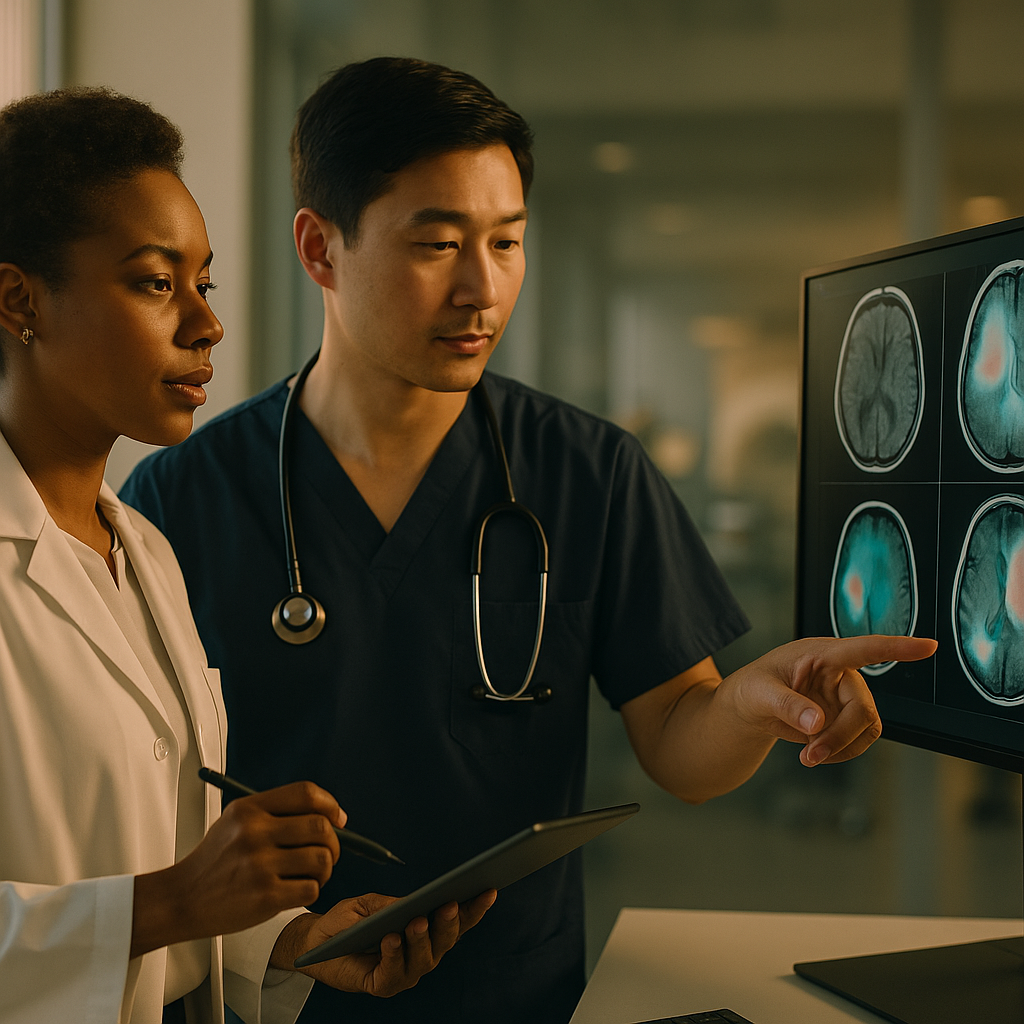
The Foundations of AI in Medical Diagnosis
Understanding the impact of AI on medical diagnosis requires a grasp of the underlying technologies that make it possible. At its core, AI in this context involves algorithms that learn from vast datasets to identify patterns, predict outcomes, and assist in decision-making. These algorithms are not magic; they are sophisticated mathematical models trained on millions of data points, including medical images, patient records, genetic information, and more.
Machine Learning and Deep Learning
Machine Learning (ML) is a subset of AI that allows systems to learn from data without being explicitly programmed. In medical diagnosis, ML algorithms are trained on historical patient data to predict disease risk, identify anomalies, and classify conditions. For instance, an ML model can learn to distinguish between benign and malignant tumors by analyzing characteristics in medical images.
Deep Learning (DL), a more advanced form of ML, uses neural networks with multiple layers (hence "deep") to analyze complex data patterns. DL is particularly powerful for image and speech recognition, making it invaluable for interpreting X-rays, MRIs, CT scans, and pathology slides. Convolutional Neural Networks (CNNs), a type of deep learning architecture, have shown remarkable success in tasks like:
- Detecting diabetic retinopathy from retinal scans.
- Identifying skin cancer from dermatoscopic images.
- Pinpointing early signs of Alzheimer's disease from brain MRI scans.
The ability of deep learning models to automatically extract features from raw data, without explicit human instruction, significantly reduces the time and effort required for feature engineering, a common bottleneck in traditional machine learning.
Natural Language Processing (NLP)
Another crucial AI technology is Natural Language Processing (NLP). NLP enables computers to understand, interpret, and generate human language. In medical diagnosis, NLP is vital for:
- Analyzing unstructured clinical notes: Extracting key information from physician notes, discharge summaries, and patient histories to identify symptoms, diagnoses, and treatment plans. This can help in flagging potential diagnostic errors or identifying patients at risk.
- Synthesizing medical literature: Rapidly sifting through vast amounts of research papers to find relevant information for complex cases or rare diseases.
- Improving electronic health records (EHRs): Automating data entry and enhancing search capabilities within EHR systems, making patient information more accessible and actionable.
By leveraging NLP, AI systems can piece together a more complete picture of a patient's health, drawing insights from data that would otherwise be too time-consuming for human clinicians to process manually. This facilitates a more holistic and accurate approach to medical diagnosis.
Practical Applications of AI in Medical Diagnosis
The theoretical underpinnings of AI translate into tangible benefits across various medical specialties. Its power lies in augmentation, not replacement, of human expertise, leading to more efficient and precise diagnostic pathways.
Radiology and Pathology
Perhaps the most prominent application of AI in medical diagnosis is in the interpretation of medical images. Radiologists and pathologists often deal with immense volumes of data, making them prime candidates for AI assistance.
- Radiology: AI algorithms can analyze X-rays, CT scans, MRIs, and mammograms to detect subtle abnormalities that might be missed by the human eye. For example, AI models are being used to identify lung nodules in chest CT scans, detect fractures, and even predict the likelihood of breast cancer from mammograms. This not only speeds up the diagnostic process but also increases the consistency and accuracy of interpretations.
- Pathology: Digital pathology, combined with AI, allows for automated analysis of tissue samples. AI can identify cancerous cells, grade tumors, and quantify biomarkers with high precision. This assists pathologists in making quicker and more accurate diagnoses, especially in complex cases or when dealing with high volumes of slides. The ability to automatically flag suspicious areas allows pathologists to focus their attention more effectively.
Early Disease Detection and Risk Prediction
One of the most exciting prospects of AI is its potential for early disease detection, often before symptoms even manifest. This capability is critical for improving prognosis and enabling timely interventions.
- Cardiovascular Disease: AI can analyze vast datasets of patient health records, including genetic predispositions, lifestyle factors, and lab results, to predict an individual's risk of heart disease or stroke years in advance. This allows for proactive preventative measures.
- Cancer Screening: Beyond image analysis, AI can integrate genetic data, family history, and lifestyle information to identify individuals at high risk for various cancers, prompting earlier and more targeted screening. For example, AI models are being developed to predict prostate cancer progression from biopsy images and clinical data.
- Diabetic Retinopathy: As mentioned, AI-powered systems can screen retinal images for early signs of diabetic retinopathy, a leading cause of blindness, enabling early intervention and preventing vision loss.
Personalized Medicine and Treatment Recommendations
AI moves beyond mere diagnosis to inform personalized treatment strategies, tailoring medical interventions to an individual's unique biological and genetic profile.
- Pharmacogenomics: AI can analyze a patient's genetic makeup to predict how they will respond to specific medications, minimizing adverse drug reactions and optimizing therapeutic efficacy. This is particularly relevant in oncology and psychiatry.
- Oncology: For cancer patients, AI can help oncologists select the most effective chemotherapy regimens or targeted therapies by analyzing tumor genomics, patient history, and outcomes from similar cases globally.
- Mental Health: AI can assist in identifying patterns in patient data to suggest personalized therapeutic approaches for mental health conditions. At SOLVYR, our AI-powered therapy and problem-solving coach, we see the potential for AI to support individuals in navigating their mental well-being by providing tailored insights and strategies.
The ability of AI to process and synthesize complex information from diverse sources is making truly personalized medicine a reality, moving away from a 'one-size-fits-all' approach.
Benefits and Challenges of AI in Medical Diagnosis
While the promises of AI in medical diagnosis are vast, a balanced perspective requires acknowledging both its transformative benefits and the significant hurdles that must be overcome for widespread, ethical, and effective implementation.
Key Benefits
The advantages of integrating AI into diagnostic workflows are compelling:
- Enhanced Accuracy and Consistency: AI algorithms, when properly trained, can achieve diagnostic accuracy comparable to, and in some cases exceeding, human experts, particularly in repetitive tasks or the detection of subtle patterns. They are not susceptible to fatigue, emotional bias, or distractions, ensuring consistent performance.
- Increased Efficiency and Speed: AI can process and analyze vast quantities of data – from imaging scans to genetic sequences – in a fraction of the time it would take human clinicians. This accelerates diagnosis, reduces wait times, and allows healthcare professionals to focus on more complex, patient-facing tasks.
- Improved Access to Care: In underserved areas or regions with a shortage of specialists, AI can act as a force multiplier, providing diagnostic support remotely and expanding access to high-quality medical expertise. This is particularly relevant for specialties like ophthalmology and dermatology.
- Discovery of New Insights: By identifying subtle correlations and patterns in massive datasets that are imperceptible to humans, AI can uncover new biomarkers, disease pathways, and therapeutic targets, driving medical research and innovation.
- Cost Reduction: By streamlining workflows, reducing diagnostic errors, and enabling earlier intervention, AI can contribute to significant cost savings in healthcare systems.
Significant Challenges
Despite the immense potential, several critical challenges must be addressed:
- Data Quality and Availability: AI models are only as good as the data they are trained on. High-quality, diverse, and unbiased medical datasets are essential but often difficult to obtain due to privacy concerns, data silos, and the inherent variability in clinical data collection. Biased training data can lead to biased diagnostic outcomes, exacerbating health disparities.
- Regulatory and Ethical Concerns: The regulatory framework for AI in medicine is still evolving. Questions around accountability for diagnostic errors, data privacy (e.g., GDPR, HIPAA), and the ethical implications of autonomous AI systems need clear guidelines. Transparency and explainability (the ability to understand how an AI arrived at a diagnosis) are paramount for clinician trust and patient acceptance.
- Integration into Clinical Workflows: Seamless integration of AI tools into existing clinical workflows and electronic health record (EHR) systems is crucial. Clunky or poorly designed interfaces can hinder adoption and negate the efficiency gains. Interoperability between different AI systems and healthcare IT infrastructure remains a hurdle.
- Cost of Development and Implementation: Developing, validating, and deploying robust AI solutions requires significant investment in research, infrastructure, and specialized talent. The initial costs can be prohibitive for smaller healthcare providers.
- Lack of Trust and Acceptance: Both patients and clinicians need to trust AI systems. Clinicians may fear job displacement or the 'black box' nature of some AI algorithms, while patients may be wary of receiving a diagnosis from a machine. Education, transparency, and demonstrable success are key to building this trust.
- Maintenance and Evolution: Medical knowledge is constantly evolving. AI models need continuous updating and retraining to remain relevant and accurate, which requires ongoing resources and monitoring.
Addressing these challenges requires a multi-stakeholder approach involving technologists, clinicians, policymakers, and patients to ensure that AI's potential in medical diagnosis is realized responsibly and equitably.
Discover your profile with our AI assessments
Our 6 science-based assessments analyze your personality, emotional intelligence, wellness, and creativity.
The Future of AI in Medical Diagnosis and FazeAI's Role
The trajectory of AI in medical diagnosis points towards an increasingly integrated and sophisticated future. We are moving beyond mere assistance to a collaborative intelligence model where AI and human expertise complement each other to achieve unprecedented levels of diagnostic precision and patient care.
Predictive and Preventative Healthcare
The future will see AI play an even more central role in shifting healthcare from reactive to proactive. AI will continuously monitor biometric data from wearables (VitalPulse, for example, explores aspects of wellness) and integrate it with genetic information, environmental factors, and lifestyle choices to predict disease onset far in advance. This will enable highly personalized preventative interventions. Imagine an AI system flagging a subtle shift in your biomarkers that indicates a heightened risk of a certain condition, allowing for lifestyle adjustments or early medical checks before any symptoms appear.
Explainable AI (XAI) and Augmented Intelligence
One of the current limitations of complex AI models is their 'black box' nature. Future developments will focus heavily on Explainable AI (XAI), where algorithms not only provide a diagnosis but also explain how they arrived at that conclusion. This transparency is crucial for building trust with clinicians and patients, allowing for critical evaluation and learning. The goal is not to replace human doctors but to create an 'augmented intelligence' partnership, where AI handles data-intensive tasks, highlights critical information, and offers potential diagnoses, while clinicians apply their nuanced understanding, empathy, and ethical judgment.
Democratization of Diagnostics
AI will increasingly democratize access to advanced diagnostics. Handheld devices powered by AI could perform initial screenings for various conditions in remote areas, linking patients to specialists virtually. This could drastically reduce healthcare disparities globally. Tools like FazeAI's assessments, such as MindPrint for personality and HeartMap for emotional intelligence, demonstrate how AI can make sophisticated self-assessment accessible, laying groundwork for broader diagnostic applications.
FazeAI's Vision for AI in Personal Health
At FazeAI, our mission is to empower individuals through AI-powered personal health and wellness assistance. While our current focus is on personal development, mental well-being, and self-assessment, we recognize the immense potential for AI to support early detection and personalized insights that intersect with medical diagnosis.
- Early Warning Signals: Our AI coaches, like EIWA for mindfulness, can help users track mood patterns, stress levels, and cognitive functions. While not diagnostic, these tools can provide early indicators of potential issues that might warrant professional medical attention.
- Data Aggregation and Insights: By allowing users to track various wellness metrics, FazeAI can help individuals become more aware of their own health trends. This data, when shared with medical professionals, can contribute to a more holistic diagnostic picture.
- Educational Resources: Through our blog and AI-driven content, we aim to educate users about health, wellness, and the role of AI in healthcare, fostering a more informed patient population.
We envision a future where AI acts as a seamless extension of personal health management, bridging the gap between daily wellness and clinical diagnostics. As the founder, my background in medicine and passion for AI drive the development of tools that are not only innovative but also ethically sound and genuinely beneficial for personal and public health. For more insights into our approach, explore our features overview and AI assessments.
Actionable Steps for Integrating AI in Medical Diagnosis
For healthcare organizations and professionals looking to leverage the power of AI in diagnostics, a strategic and phased approach is crucial. This isn't about simply buying a new piece of software; it's about transforming workflows, training staff, and ensuring ethical deployment.
For Healthcare Providers and Hospitals
- Start Small with Pilot Projects: Instead of a sweeping overhaul, identify specific areas where AI can provide immediate, measurable value. Radiology or pathology departments, with their high volume of image-based data, are often excellent starting points. Select a well-defined problem, such as detecting specific types of anomalies in mammograms or retinal scans.
- Invest in Data Infrastructure: AI thrives on data. Ensure your electronic health record (EHR) systems are robust, data is standardized, and there are secure mechanisms for data collection, storage, and anonymization. Poor data quality will cripple any AI initiative. Consider data lakes and cloud solutions for scalability.
- Foster Collaboration: Create cross-functional teams comprising clinicians, IT specialists, data scientists, and ethicists. Clinicians provide invaluable domain expertise, while data scientists bring the technical know-how. Regular communication is key to developing relevant and effective AI tools.
- Prioritize Training and Education: Educate staff – from front-line nurses to senior physicians – about AI's capabilities, limitations, and how it will integrate into their daily tasks. Address fears and misconceptions. Provide hands-on training to ensure comfort and proficiency with new AI-powered tools.
- Establish Clear Regulatory and Ethical Guidelines: Work with legal and ethical committees to develop internal policies regarding AI use, data privacy, accountability, and patient consent. Ensure compliance with local and international regulations (e.g., HIPAA, GDPR). Transparency with patients about AI's role in their care is vital.
- Measure and Iterate: Implement clear metrics to evaluate the performance of AI systems (e.g., accuracy, speed, impact on patient outcomes, cost savings). Be prepared to iterate, refine, and retrain models as new data becomes available and clinical needs evolve.
For Individual Clinicians
- Stay Informed: Keep abreast of the latest developments in AI for your specialty. Read industry journals, attend webinars, and engage with professional communities. Understand the specific AI tools relevant to your practice.
- Embrace Lifelong Learning: AI is a rapidly evolving field. Be open to learning new skills and adapting your practice. This might involve understanding how to interpret AI-generated reports or critically evaluating AI's suggestions.
- Advocate for Responsible AI: Engage in discussions within your institution and professional organizations about the ethical implementation of AI. Your clinical perspective is crucial in shaping best practices.
- Collaborate with AI Specialists: If you have an opportunity, work with data scientists or AI developers. Your clinical insights are invaluable for training and validating AI models, ensuring they are clinically relevant and safe.
By taking these structured steps, healthcare stakeholders can effectively harness AI to revolutionize medical diagnosis, leading to a future of more precise, efficient, and patient-centric care. For those interested in personal health assessments, exploring resources like FazeAI's psychological assessments can provide a glimpse into how AI is already being used to understand complex human traits.
Our specialized AI coaches guide your journey
Each coach is designed for a specific area of your personal development.
Conclusion
The integration of Artificial Intelligence into medical diagnosis is not merely an incremental improvement; it represents a fundamental shift in how we understand, detect, and treat diseases. From enhancing the precision of radiological interpretations to predicting disease risk years in advance and personalizing treatment regimens, AI is proving to be an indispensable ally in the quest for better healthcare outcomes. Its capacity to analyze vast, complex datasets with unparalleled speed and accuracy is transforming diagnostic workflows, reducing human error, and ultimately empowering healthcare professionals with more comprehensive insights.
However, realizing the full potential of AI in this critical domain requires a concerted effort to address significant challenges related to data quality, regulatory frameworks, ethical considerations, and seamless integration into existing clinical systems. Building trust among both clinicians and patients through transparency, education, and demonstrable efficacy will be paramount. At FazeAI, we are committed to contributing to this future by developing AI-powered tools that empower individuals with greater insight into their own health and well-being, laying a foundation for more informed personal and medical decisions.
The future of medical diagnosis is undoubtedly collaborative, with AI acting as a powerful co-pilot, augmenting human intelligence and empathy. As we navigate this exciting frontier, continuous innovation, rigorous validation, and a steadfast commitment to ethical principles will ensure that AI serves humanity's highest healthcare aspirations.
Frequently Asked Questions (FAQ)
Q1: Is AI intended to replace doctors in medical diagnosis?
A1: No, the primary goal of AI in medical diagnosis is not to replace doctors but to augment their capabilities. AI acts as a powerful tool that assists clinicians by processing vast amounts of data, identifying subtle patterns, and providing highly accurate insights and predictions. This allows doctors to make more informed decisions, increase efficiency, and focus their valuable time on complex cases, patient interaction, and empathetic care. AI excels at data analysis, while human doctors bring critical thinking, emotional intelligence, and a holistic understanding of the patient's individual circumstances, which AI cannot replicate.
Q2: How accurate are AI diagnostic systems?
A2: The accuracy of AI diagnostic systems varies widely depending on the specific application, the quality and quantity of training data, and the complexity of the diagnostic task. In some specialized areas, such as detecting diabetic retinopathy from retinal images or identifying certain cancers in pathology slides, AI systems have demonstrated accuracy comparable to, or even exceeding, human experts. However, AI models are prone to errors if trained on biased data or if presented with scenarios outside their training scope. Continuous validation, rigorous testing, and human oversight are essential to ensure the reliability and safety of AI in clinical practice.
Q3: What are the biggest ethical concerns with AI in medical diagnosis?
A3: Several key ethical concerns surround the use of AI in medical diagnosis. Foremost among these are data privacy and security, as AI systems rely on access to sensitive patient information. Bias in AI algorithms, stemming from unrepresentative training data, can lead to diagnostic disparities and worsen health inequities. Accountability for diagnostic errors made by AI systems is another complex issue. Furthermore, the 'black box' nature of some AI models raises concerns about transparency and explainability – clinicians need to understand how an AI arrived at a diagnosis to trust and integrate it effectively. Ethical guidelines are continuously being developed to address these challenges.
Q4: How does AI help with personalized medicine?
A4: AI is a cornerstone of personalized medicine by enabling the analysis of an individual's unique biological and genetic profile to tailor medical interventions. It can process complex data such as genomics, proteomics, electronic health records, and lifestyle factors to predict a patient's response to specific treatments, identify optimal drug dosages, and forecast disease progression. For example, in oncology, AI can help select targeted therapies based on a tumor's genetic mutations, leading to more effective and less toxic treatments. This move towards highly individualized care aims to maximize therapeutic benefit and minimize adverse effects, as explored in tools like FazeAI's assessments for personal insights.
Q5: What data does AI use for medical diagnosis?
A5: AI for medical diagnosis utilizes a vast array of data types. These include: medical images (X-rays, CT scans, MRIs, mammograms, ultrasound, pathology slides), electronic health records (EHRs) containing patient history, symptoms, lab results, medication lists, and physician notes, genetic and genomic data, biometric sensor data from wearables (heart rate, sleep patterns), epidemiological data, and even unstructured text from medical literature and research papers. The more diverse, comprehensive, and high-quality the data, the more robust and accurate the AI model tends to be in its diagnostic capabilities.
Start your transformation with FazeAI
AI-powered coaching, daily tracking & science-backed tools — available 24/7.
Try for freeFree • No commitment • Available on mobile and web

Fondateur & Créateur · Futur Psychiatre
Founder and creator of FazeAI. Background in LAS (Health Access License) with ongoing medical studies abroad pursuing psychiatry specialization. Full-stack developer passionate about the intersection of artificial intelligence, neuroscience, and mental health. He designs ethical AI tools for personal transformation and therapeutic support.
Recent articles
Navigating the French AI Landscape: A Comprehensive Evaluation of AI Service Providers
Explore the vibrant landscape of AI service providers in France with this comprehensive guide. We evaluate key players, emerging trends, and offer a practical framework for selecting the right AI partners, ensuring successful implementation and strategic growth for your business.
The Profound Impact of AI Technology on the Tech Sector: A Deep Dive
Artificial Intelligence is profoundly reshaping the tech sector, from revolutionizing software development and hardware design to creating new business models and transforming the workforce. This deep dive explores the multifaceted impact of AI technology, highlighting its disruptive potential, the opportunities it creates, and the critical ethical considerations for responsible development.
AI Advantages for Startups: A Detailed Guide to Business Integration
Discover how AI can revolutionize your startup's growth, efficiency, and customer experience. This detailed guide explores the strategic integration of AI in business, offering practical tips and real-world examples to help nascent companies thrive in a competitive market.
Successful AI Projects: A Comprehensive Guide to Innovation and Impact
Explore real-world examples of successful AI projects across healthcare, retail, finance, and manufacturing. This comprehensive guide details key success factors, practical implementation tips, and ethical considerations for impactful AI innovation.